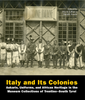








| Rodzaj: | Italy and Its Colonies |
2 tomowe wydanie „Włochy i ich kolonie” odsłania zawartość jakie skrywają magazyny muzealne Euroregionu (Trentino, Południowy Tyrol i Tyrol) by odsłonić „ukrytą historię” włoskich zbiorów kolonialnych.
Autorzy: Davide Zendri, Nicola Labanca
ISBN: 978-3-903341-46-3 (wersja angielska), 978-3-903341-47-0 (wersja włoska), 978-3-903341-48-7 (wersja niemiecka)
Waga: 5 kg
Dane Techniczne: 2 tomy, łącznie 640 stron, zszytych w twardej oprawie. Format: 29,5 x 26 cm.
- Publikacja wydawnictwa Verlag Militaria, wysoko cenionego wśród kolekcjonerów i hobbystów
OPIS ANGLOJĘZYCZNY
For the double volume “Italy and Its Colonies”, the storage rooms of the museums of the Euregio (Trentino, South Tyrol and Tyrol) open up to reveal a “hidden history”: that of the Italian colonial collections. For decades, African weapons, khaki-coloured uniforms, memorabilia and exotic photographs populated museum showcases – often without proper contextualization – and remained as silent witnesses of a repressed past.
This work, edited by Nicola Labanca and Davide Zendri, and published by MITAG – Museo Storico Italiano della Guerra in Rovereto in cooperation with the Verlag Militaria, is the result of an extensive research and cataloguing project carried out for the Euregio Museum Year 2025. It is not a simple catalogue, but an investigation into how these objects – collected during Italy’s colonial history in Eritrea, Somalia, Libya and Ethiopia – have come down to us and which narratives they shaped.
The book analyses the creation of these collections, most of which took form during the fascist Ventennio, when museums such as the one in Rovereto opened special “colonial rooms”. In this context, the objects served not only documentation purposes but also the glorification of conquest, the construction of an exotic enemy image, and the strengthening of Italian imperial identity through propaganda.
Italy and Its Colonies questions – through essays and an image section structured by object categories and regions of origin – the fundamental nature of these collections. Researchers such as Nicola Labanca and Emanuele Ertola explain the specific characteristics of Italian colonialism. Massimo Zaccaria explores the role of the Askari. Alessandro Triulzi reflects on the complex forms of representing the colony, while Nicola Fontana and Sabrina Meneghini examine the surviving photographic collections.
At the heart of the volume is the material culture and material geography of the empire. Detailed analyses by Renzo Catellani, Gabriele Zorzetto and Davide Zendri examine uniforms, helmets and insignia. Gianfrancesco Lusini traces the long journey of ethnographic objects from the Ethiopian highlands to European display cases.
This mapping extends from the first possessions in Eritrea and Somalia to the Mahdist War in Sudan, the conquest of Libya and finally the brutal war in Ethiopia, without neglecting lesser-known episodes such as the Tianjin concession or the Dodecanese.
Through the meticulous cataloguing of the holdings of museums such as MITAG, the Fondazione Museo Storico del Trentino, the Museo Caproni, the Museo Nazionale Storico degli Alpini, the MAG in Riva and the Palais Mamming in Merano, the volume offers an essential tool for understanding not only what Italy took from Africa, but also how it chose to narrate that conquest to itself.